


What if the most dangerous person in the room wasn’t the one you’d ever suspect? History has a way of overlooking women, and for decades, even the FBI refused to acknowledge they could be serial killers at all.
This episode of Haunts & Hollows: True Tales of the Gothic South aims to set the record straight.
In this second installment of our Deadly Dames series, we round out our list of twelve lethal women with six more cases that are equal parts fascinating and disturbing. Along the way, we unpack why female killers are so much harder to catch (Need a hint? They tend to know their victims, favor undetectable methods like poison, and often operate in plain sight as trusted caregivers).
The first trio killed not for money, but out of psychological compulsion: a veterans’ hospital nursing assistant who fatally injected elderly patients, a mentally ill nurse who kept a handwritten list of her victims, and a troubled babysitter who suffocated multiple children in her care.
The second trio were coldly profit-driven: Charleston’s legendary 18th-century innkeeper who allegedly poisoned travelers, a churchgoing grandmother who arsenic-poisoned five family members for insurance payouts, and the infamous “Giggling Granny,” Nannie Doss, who killed eleven people across three decades, including four husbands, before anyone thought to look her way.
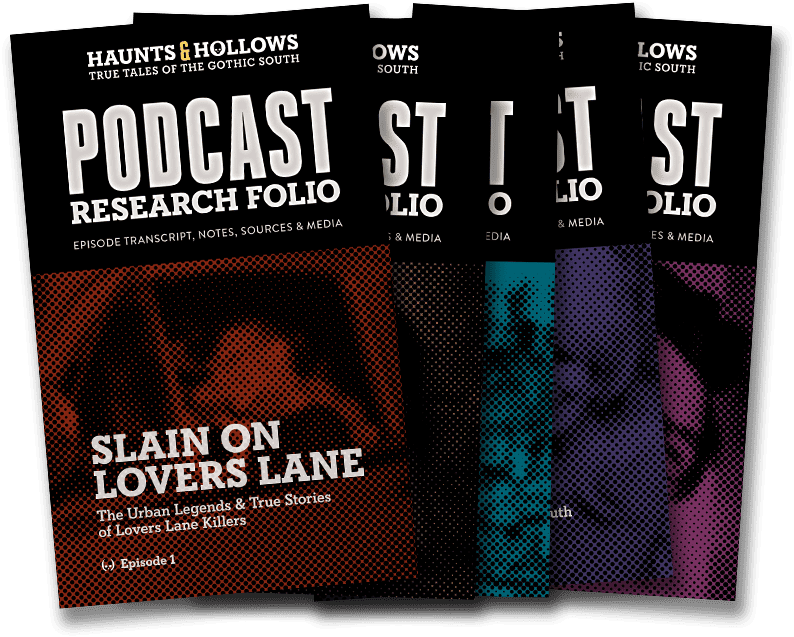
Dive Deeper with the Research Folio
Get a full transcript, list of sources, supplemental media, and more for each drop PLUS early access to new episodes. A special perk for our email subscribers.
Haunts & Hollows: True Tales Of The Gothic South
Haunts & Hollows: True Tales Of The Gothic South is where true crime meets Southern folklore. Every other week, mystery author Liam Ashe digs past the haunted plantations, urban legends, and moss-draped cemeteries to uncover the real, often much darker history behind them. Lower the lights, lock the doors, and settle in. Tonight, the truth may just be stranger than the legend.
Subscribe now and you’ll get an intro to every episode, including early access and an exclusive Research Folio.