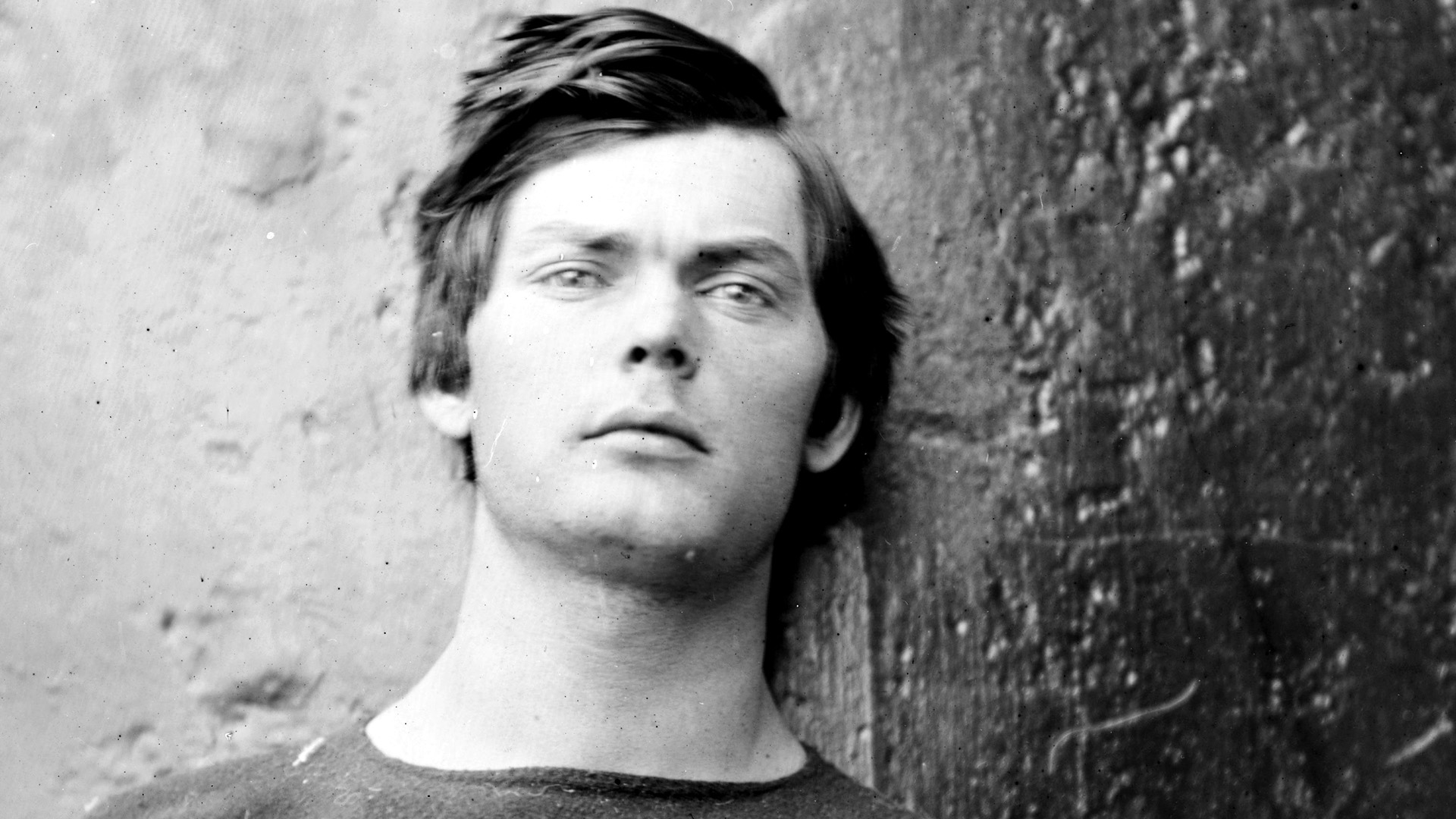
Lewis Powell’s Skull: an excerpt from Haunts & Hollows: Florida Coast.
One of the strangest stories to come from the Civil War began just as the conflict was drawing to a close and ended more than 100 years later in this small cemetery outside Geneva. While John Wilkes Booth is best remembered for the assassination of President Lincoln on April 14, 1865, he had several other cohorts who were tried and either imprisoned or executed for their part in the plot. Of the eight co-conspirators, there was one—Confederate soldier Lewis Thornton Powell—whose bizarre tale continued far beyond his death at the gallows.
Born in Alabama the youngest of eight children, Lewis cut a striking figure. Well over 6’ tall with a broad jaw due to a mule kick when he was 13, the young soldier fought for the 2nd Florida Infantry in the Peninsula Campaign of 1862. In a bit of foreshadowing, he was said to have carried the skull of a Union soldier, which he used as an ashtray, eventually earning himself the nickname “Lewis the Terrible.”
In early 1865, Lewis met John Wilkes Booth in Baltimore, and the two became close friends. Together with a group of fellow malcontents, they plotted first to kill President Lincoln. Lewis’ role was to make his way to the home of Secretary of State William Seward. Despite his size and military experience, he was not as successful as his co-conspirators.
Bluffing his way into the house with a delivery of medicine for an injured William Seward, Lewis was confronted by several members of the family. When his gun misfired, he instead pistol-whipped his target’s son, attacked an attending sergeant with a hunting knife, and attempted to stab William in the face and neck. The Secretary, who had been injured in a carriage accident, was fortunately bound up in a splint of metal and canvas around his jaw, deflecting most of the blows.
Lewis fled after attacking a second Seward son and a State Department messenger. Less than three days later, he and his colleagues were arrested, and he was identified by the Secretary’s sons as the man who had attacked their father. The following year, all eight were tried and on July 7, 1865, Lewis was hung from the gallows in the Arsenal courtyard in Washington, D.C.
According to official records, Lewis was first buried along the east wall of the prison yard with John Wilkes Booth and several others. Two years later, they were moved elsewhere in the Arsenal. Two years after that, President Johnson agreed to release the bodies to their families.
What happened next is uncertain. Records suggest that Lewis’ family in Florida asked to retrieve his remains but never did so. Over the years his bones were moved from D.C.’s Graceland Cemetery to Holmead’s Burying Ground. When the family allegedly showed up in 1871, they were given most of his body for yet another reburial. The dead man’s head was inexplicably missing. On the way home, Lewis’ father fell ill, and they buried their son one last time at a small farm along the way.
Other records insist Lewis’ family declined to retrieve him, so he was eventually moved to Holmead’s Burying Ground. When Holmead’s closed in 1874, the most reliable reports suggest that Lewis was reburied in a mass grave in Section K, Lot 23, at nearby Rock Creek Cemetery.
In 1991, a researcher at the Smithsonian discovered a skull later identified as Lewis Powell’s among the specimens of the museum’s Native American skull collection. An investigation suggests that A. H. Gawler of Gawler’s Funeral Home had removed the skull when handling Lewis’ 1870 move to Holmead’s. Fifteen years later, he donated it to the Army Medical Museum, and in time, it landed in the archives at the Smithsonian.
The Smithsonian contacted Lewis’ closest living relatives, and on November 12, 1994, his skull was buried next to the grave of his mother, Caroline Patience Powell, at Geneva Cemetery. Today you can visit their graves among the palm scrub beneath the oak trees in the small Florida community.